How to Choose the Best Autonomous Forklift for Your Business?
Choosing the best Autonomous Forklift for your business can be challenging. The right forklift improves efficiency and lowers operational costs. According to industry expert Dr. James T. Ling, “Selecting the right Autonomous Forklift is crucial for optimizing warehouse operations.” His insight emphasizes the importance of careful evaluation.
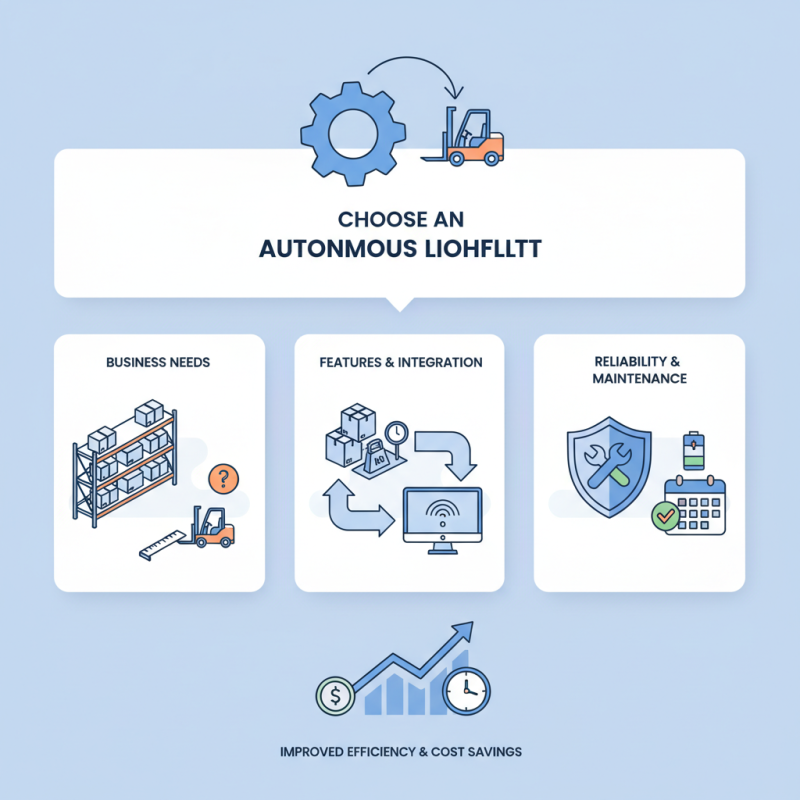
When considering an Autonomous Forklift, think about your specific needs. The size of your warehouse matters. Different models offer various capacities and functionalities. Some might integrate seamlessly with current systems, while others may require adjustments.
Reliability plays a key role in the decision-making process. Will the forklift withstand daily use? Researching different brands is essential. Not all Autonomous Forklifts are created equal. Some options may need more frequent maintenance, which could affect productivity. Taking the time to analyze these aspects can lead to a more informed choice, ultimately enhancing your business operations.
Understanding the Different Types of Autonomous Forklifts Available
When exploring autonomous forklifts, understanding the types available is crucial. There are several categories tailored to specific tasks. For instance, some forklifts excel in narrow aisle environments, while others are designed for high-capacity loading. These variations influence performance in diverse settings.
Another important distinction lies in the navigation technology. Some autonomous forklifts utilize lasers for precise movement. Others may rely on cameras and sensors to adapt to their surroundings. Each method has its pros and cons, and the choice will depend on your warehouse layout and requirements.
Adopting autonomous forklifts can lead to increased efficiency. However, operational challenges may arise. For instance, integrating these systems requires training staff and adjusting existing workflows. Regular maintenance is essential to prevent unforeseen breakdowns. Ensure your team is prepared for the transition. Anticipating adjustments can smooth out the introduction of this technology into your operations.
Evaluating Your Business Needs for Autonomous Forklift Deployment
When considering the right autonomous forklift for your business, evaluating your operational needs is crucial. Start with understanding the type of products you handle. Different loads may require varying capacities and lifting heights. Assess your warehouse layout as well. Narrow aisles might need more compact models. Your existing technology also plays a role; ensure compatibility with warehouse management systems for seamless integration.
Another essential factor is workforce dynamics. Would the workforce adjust easily to automation? Training requirements could impact deployment timelines. Gather feedback from staff; they provide insights on daily challenges that automation could address. Keep in mind that while automation improves efficiency, it may not eliminate the need for human oversight. Strive for a balance between technology and human resources.
Finally, consider future growth and flexibility. Your choice should accommodate potential changes in inventory or warehouse structure. Investing in an adaptable model may be wise. Reflect on your long-term goals and how an autonomous forklift fits within that vision. Not every option will meet your expectations. Assessing your unique circumstances will yield the best decision.
Autonomous Forklift Usage Across Different Industries
Key Features to Look for in an Autonomous Forklift
When selecting an autonomous forklift, it's crucial to examine key features that will enhance efficiency and safety in your operations. The ability to seamlessly navigate complex warehouse layouts is critical. Reports indicate that approximately 70% of operational delays are a result of poor material handling systems. Thus, advanced navigation capabilities powered by LiDAR and computer vision are essential for optimal performance.
Safety systems should be a priority as well. Forklifts that incorporate multiple sensors can detect obstacles and adjust their paths accordingly. According to industry data, automated solutions can reduce workplace accidents by up to 50%. This reduction is vital not only for safety compliance but also for maintaining productivity levels.
Additionally, consider the forklift's integration capabilities with existing software platforms. An autonomous forklift must communicate effectively with inventory management systems. A study shows that businesses leveraging integrated automation report a 30% increase in operational throughput. However, the challenge lies in ensuring these systems are compatible. Regular updates and support may be needed, which can impact initial investment costs. Being aware of these factors will guide you toward an informed choice.
Assessing the Safety Standards and Compliance for Autonomous Forklifts
When it comes to autonomous forklifts, safety standards and compliance are paramount. These machines operate in complex environments, handling heavy loads and navigating through tight spaces. Ensuring that an autonomous forklift meets safety regulations can prevent accidents and protect your workforce.
Before choosing a unit, assess its safety features. Look for sensors that detect obstacles and emergency stop mechanisms. These features are crucial for minimizing risks. Many models come with varying compatibility for safety measures. Do your research; understanding these options can guide your decision.
Tips: Implement regular safety audits. This practice helps identify potential hazards. Also, consider training programs for your operators. Even if the forklift is autonomous, human oversight remains essential.
Understanding compliance with industry standards is vital. Autonomous forklifts should meet local and international safety norms. Different regions may have specific requirements. Make sure to verify certifications and ensure alignment with them. This step not only enhances safety but can also improve your business’s credibility.
Cost Considerations and ROI Analysis for Autonomous Forklift Investment
Investing in autonomous forklifts requires a thorough cost analysis. According to a recent report by the Robotics Industry Association, companies can save 20-40% on labor costs by integrating these technologies. Initial investments may be high, often exceeding $100,000 per unit. Yet, operational efficiencies can quickly lead to substantial returns.
Maintenance costs for autonomous forklifts tend to be lower. A study indicated a reduction in maintenance expenses by up to 30% compared to traditional models. However, businesses must consider the time it takes to achieve ROI. Generally, companies can expect a payback period of 2 to 5 years, depending on usage patterns.
Understanding the total cost of ownership is critical. Include training, software updates, and downtime in your calculations. Incorrect estimates can lead to budget shortfalls. Some firms may underestimate the necessary infrastructure upgrades, impacting overall costs. Each business needs a tailored plan, focused on specific operational needs and strengths.