How to Choose the Best Exterior Door Machines in 2026?
Choosing the right Exterior Door Machines in 2026 requires more than comparing prices and motor power. A reliable machine must match your door materials, production volume, workshop space, and finishing standards. It should also support safer handling, repeatable accuracy, and practical maintenance.
Gary Katz, a respected construction educator and door-installation specialist, often repeats the workshop rule, “Measure twice, cut once.” That simple advice remains relevant when selecting CNC routers, edge-banding systems, drilling machines, and door assembly equipment. Small measurement errors can create uneven hinge positions, poor weather seals, and costly rework. A machine that looks impressive in a showroom may perform poorly with your actual timber, composite panels, or hardware requirements.
Real production conditions matter.
This guide examines the details buyers sometimes overlook. We will consider cutting precision, spindle stability, dust collection, software compatibility, operator training, spare parts, and after-sales support. Energy consumption also deserves attention, especially for manufacturers seeking lower operating costs in 2026. A quieter machine may improve the workshop environment, but noise ratings should not replace performance testing.
The process is not perfectly simple. Some manufacturers publish attractive specifications that are difficult to verify. Others offer advanced automation that smaller factories may never use. Therefore, the best Exterior Door Machines are not always the most expensive models. They are the systems that deliver dependable results, fit existing workflows, and remain serviceable after installation. This article provides a practical framework for comparing equipment carefully, testing assumptions, and avoiding decisions based only on marketing claims.
Define Exterior Door Machines and Their Main Applications
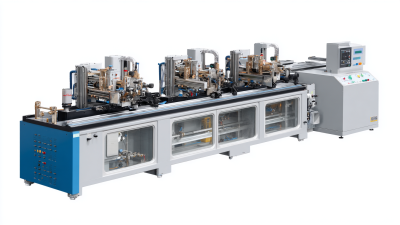
Exterior door machines are industrial systems designed to cut, shape, drill, assemble, or finish door components. They support production of wooden, aluminum, steel, and composite exterior doors. Unlike automatic door openers, these machines manufacture the door itself. Common equipment includes CNC routers, profile saws, hinge and lock drilling units, edge sanders, and assembly stations.
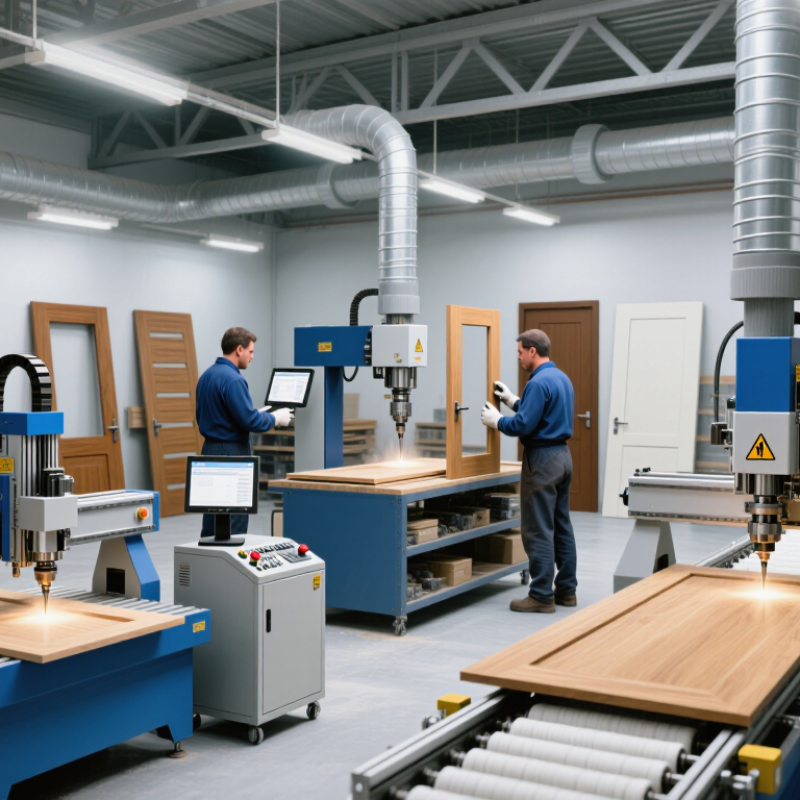
Their main applications begin with accurate panel cutting and continue through detailed hardware preparation. A CNC machine can mill a lock pocket, drill hinge holes, and create channels for weather seals. Profile machines shape frames and thresholds with consistent dimensions. Sanding equipment removes rough edges around a freshly cut panel. Assembly systems help workers align frames, glass openings, insulation, and hardware.
Small errors matter.
A two-millimeter shift can affect closing pressure and draft resistance.
Choosing the best exterior door machine in 2026 requires more than checking speed. Look for stable calibration, dust extraction, guarded cutting areas, emergency controls, and software that operators can learn quickly. Machines should also handle the materials used in your workshop. A system built for softwood may struggle with reinforced aluminum profiles. Maintenance access is equally important. I have seen highly automated equipment lose productivity because one sensor was difficult to replace. No machine is perfect. Review service records, training support, spare-part access, and sample results before purchasing. Run a real test using your own door designs. That reveals weaknesses brochures often hide.
Identify Door Materials, Designs, and Production Requirements
How to Choose the Best Exterior Door Machines in 2026?
Begin with the door material, not the machine catalogue. Timber doors need CNC routing, sanding, drilling, and accurate joinery. Steel doors require punching, forming, welding, and controlled coating. Fiberglass and composite doors demand clean trimming, dust extraction, and stable clamping. Aluminum units often need precision sawing, corner crimping, and profile drilling. A mixed-material factory may need flexible cells, although flexibility can reduce speed.
Design changes the production route. Flush doors suit repeatable panel processing, while stile-and-rail designs require tighter joint control. Glazed, louvered, oversized, or curved doors need different fixtures and inspection points. The U.S. Department of Energy notes that windows can represent 25–30% of household heating and cooling energy use. Therefore, door-lite machining, seal placement, and frame accuracy deserve serious attention. Small errors matter.
Production data should guide automation. The International Federation of Robotics reported 541,302 industrial robot installations worldwide in 2023. That growth supports robotic handling, but automation is not automatically profitable. Record batch size, changeover time, tolerances, dust levels, operator skill, and daily output before purchasing. Check whether the machine handles your largest panel and smallest detail. Also verify software compatibility and maintenance access. I would not automate every operation. That assumption can fail. A slower, adaptable machine may outperform a faster system when designs change frequently. Could your current inspection process detect a 1-millimeter misalignment?
Evaluate Automation, Precision, Safety, and Energy Efficiency
How to Choose the Best Exterior Door Machines in 2026?
Evaluate Automation, Precision, Safety, and Energy Efficiency
Automation should reduce repetitive handling, not remove human judgment. The International Federation of Robotics reported 541,302 industrial robot installations worldwide in 2023. For exterior door production, choose machines with programmable routing, automatic tool changes, and live defect detection. These features can shorten cycle times and improve repeatability. Still, excessive automation may complicate maintenance. Test the machine with real door sizes and materials before purchasing.
Precision directly affects sealing, alignment, and customer complaints. ISO 230-1 provides methods for evaluating machine-tool geometric accuracy. Ask suppliers for measured tolerances, calibration records, and sample-cut results. Check hinge pockets, lock openings, and frame joints under repeated production cycles. Measure twice. A small cutting error can create drafts or uneven compression around the gasket.
Safety requires more than an emergency-stop button. OSHA 1910.212 addresses guarding around points of operation and moving machine parts. Look for interlocked doors, light curtains, clear lockout points, and simple maintenance access. Energy performance also deserves attention. The U.S. Department of Energy states that air leakage can represent 25% to 40% of heating and cooling energy use in a typical home. Machines that maintain tighter joints can support better door performance. ISO 14955-1 also offers a framework for evaluating machine-tool energy efficiency. I would compare standby power, compressed-air demand, and waste rates, not just motor ratings.
This brand-neutral 2026 evaluation compares common exterior door machine configurations on a normalized 0–100 index. Higher scores indicate greater automation, dimensional precision, operator safety, and energy efficiency. The benchmark uses measurable factors such as automated process coverage, repeatability, guarding and emergency-stop provisions, idle-power management, and energy use per finished door.
Select Equipment Based on Budget, Maintenance, and Future Expansion
Choosing exterior door machines in 2026 starts with the budget, but purchase price is only the visible number.
A basic hinge and lock machining cell may suit a small workshop. A CNC center fits varied profiles and higher volumes. Compare spindle hours, tooling, software, installation, and operator training.
Budget first. Deloitte’s 2023 Smart Manufacturing Survey found that 86% of manufacturers expect smart manufacturing to become a key competitiveness driver within five years. That does not mean every shop needs automation today. Cash flow matters more than fashion.
Maintenance should be priced before production begins. Ask for preventive schedules, spare-part lead times, remote diagnostics, and local technician coverage. Keep critical cutters, sensors, and belts on a shelf.
The U.S. Department of Energy estimates that air leakage can represent 25% to 40% of household heating and cooling energy use. Tight machining, clean boring, and consistent seals affect more than appearance. They influence field performance.
Leave space for a second machine, three-phase capacity, dust extraction, and data connections. A low-cost purchase can become expensive when the floor plan blocks expansion. I would not assume every promised productivity gain will appear.
Tips:
Request a paid sample run using your hardest wood, thickest panel, and actual hardware. Measure cycle time, rejects, noise, dust, and changeover minutes. Ask for five-year total cost, not a glossy quote. Start modular if volume is uncertain. Measure everything. Review the decision after 90 days; real maintenance data may expose an uncomfortable mistake.