
What Are Exterior Door Machines and How Do They Work?
Exterior Door Machines are specialized systems used to manufacture, shape, assemble, and test exterior doors. They handle tasks that demand consistent pressure, accurate angles, and repeatable finishing. A typical production line may include cutting saws, CNC routers, edge banders, drilling units, pressing stations, and sealing equipment. Each machine performs a defined operation, yet the final door depends on how well these stages work together.
Gary Katz, a longtime commercial door and hardware educator, has emphasized: “A door is only as reliable as the details that let it move, close, and seal.” That principle explains why Exterior Door Machines do more than speed up production. They help control hinge recesses, lock preparations, panel joints, frame dimensions, and weatherstrip channels. A small cutting error can create visible gaps around the frame. Poor alignment may cause rubbing, air leakage, or premature hardware wear.
The process begins with digital measurements or programmed specifications. Machines then cut materials, shape components, and create precise openings for hardware. Sensors may check position, pressure, and surface quality during production. Operators still matter. They inspect edges, adjust tooling, and respond when materials behave differently than expected. Automation is powerful, but it is not flawless. Wood can shift, composite panels can flex, and software settings can be misunderstood. This guide explains how Exterior Door Machines operate, where they improve consistency, and why skilled oversight remains essential in modern door manufacturing.
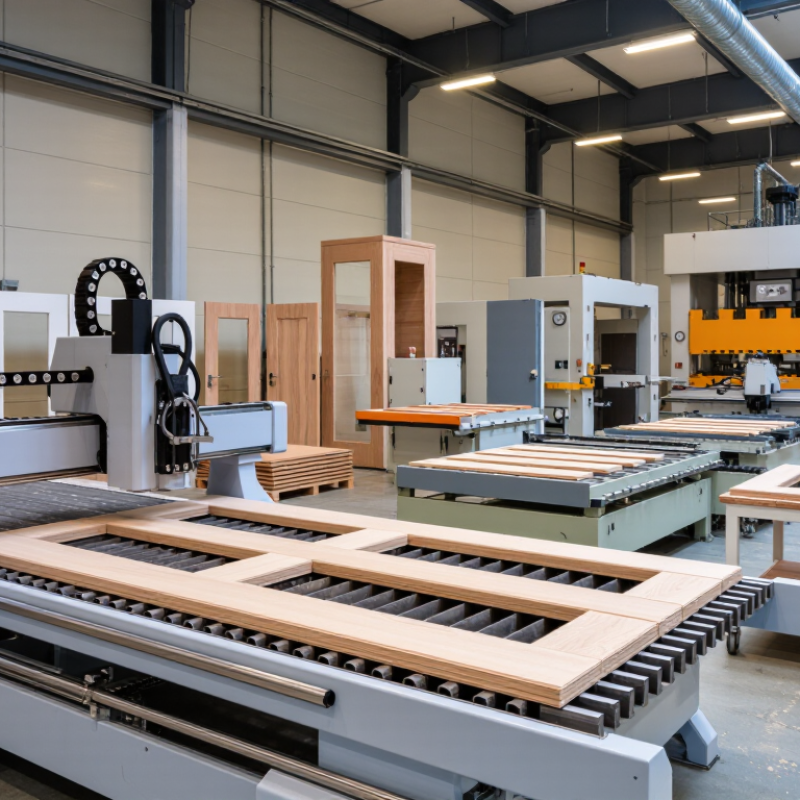
Exterior Door Machines Defined: Operators, Motors, Sensors, and Controls
Exterior door machines are the working systems behind powered entry doors. The phrase can sound mechanical, but it usually describes an operator assembly. An operator moves the door through controlled opening and closing cycles. A motor supplies rotation, while gears transfer that force to the door arm or shaft. Different doors require different torque, speed, and mounting arrangements.
The controller acts as the system’s decision center. It receives signals from push plates, access devices, timers, and safety sensors. Motion sensors detect approaching users, while presence sensors help prevent contact during closing. Some systems also monitor door position and motor resistance. A properly adjusted operator should open smoothly, pause briefly, and close without a sharp impact. Small details matter here. A loose arm can create noise, uneven movement, and early component wear.
Exterior conditions make the equipment less predictable. Wind pressure, rain, dust, temperature changes, and heavy foot traffic all affect performance. During inspections, technicians should check fasteners, wiring, sensor alignment, and emergency release functions. They should also measure closing speed instead of trusting appearance alone. A door may look safe while closing too quickly. That assumption is risky. Maintenance intervals depend on usage and exposure, not just the calendar. Even experienced installers can miss a sensor blocked by dirt or a control setting changed after service. Clear records, tested adjustments, and qualified installation support more reliable operation.
| System Element | Primary Function | How It Works | Typical Data or Operating Range | Common Exterior-Door Application | Important Design Considerations |
|---|---|---|---|---|---|
| Automatic Door Operator | Moves the door leaf without requiring manual pushing or pulling. | Receives a command from a sensor, push button, access-control device, or fire-alarm interface, then drives the door through opening and closing cycles. | Low-energy or full-power operation; opening speed is commonly adjustable. | Accessible entrances, office buildings, healthcare facilities, retail entrances, and public buildings. | Must be matched to door weight, width, opening frequency, traffic level, and local safety requirements. |
| Electric Motor | Converts electrical energy into mechanical motion. | The motor turns a gearbox, belt, arm, or sliding mechanism that transfers torque to the door leaf. | Often powered by low-voltage DC or electronically controlled motor systems. | Used in swing-door operators, sliding-door operators, and telescopic door systems. | Motor selection affects starting torque, noise, energy use, duty cycle, and service life. |
| Gearbox or Drive Transmission | Increases usable torque and controls the relationship between motor speed and door movement. | Gears, belts, pulleys, or direct-drive elements transfer motor output to the door hardware. | Designed for controlled acceleration, deceleration, and holding force. | Especially important for heavy swing doors and high-cycle sliding entrances. | Requires correct alignment and periodic inspection for wear, tension, lubrication, or obstruction. |
| Motion or Presence Sensor | Detects people approaching or occupying the doorway. | Radar, microwave, infrared, or combined sensing technology identifies movement or presence and sends an activation signal to the controller. | Detection distance and field of view vary by sensor type and installation height. | Hands-free activation at entrances with regular pedestrian traffic. | Sensor positioning must reduce false activations from vehicles, reflections, weather, and nearby moving objects. |
| Safety Sensor | Helps prevent the door from striking a person or object. | Monitors the threshold, closing path, or door area and instructs the operator to stop, hold, or reverse when an obstruction is detected. | May use infrared beams, presence detection, pressure-sensitive edges, or monitored safety circuits. | Automatic swing doors, sliding doors, and entrances exposed to heavy pedestrian use. | Safety devices should be tested during commissioning and routine maintenance. |
| Control Unit | Coordinates inputs, motor movement, safety functions, and operating modes. | Processes signals from sensors and switches, then controls motor direction, speed, braking, hold-open time, and fault responses. | Common adjustable settings include opening speed, closing speed, delay time, and operating mode. | Central control component in most powered exterior-door systems. | Control logic should prioritize safety inputs and provide a predictable response during faults or power interruptions. |
| Activation Device | Requests that the door open. | A push plate, touchless switch, card reader, keypad, remote control, or building-management signal sends an opening command. | May be manually operated, touchless, wireless, or integrated with access control. | Accessible entrances, secure facilities, service doors, and controlled building entry points. | Activation should be located where users can approach safely and where the door has adequate clearance to open. |
| Door Position Sensor or Encoder | Reports the door’s position and movement to the controller. | A limit switch, magnetic sensor, encoder, or motor-feedback system identifies open, closed, moving, or intermediate positions. | Provides position feedback for controlled stops and fault detection. | Used where precise movement and reliable closing are required. | Incorrect calibration can cause incomplete opening, excessive force, or repeated cycling. |
| Power Supply and Backup Battery | Provides operating power and supports selected functions during a power interruption. | The power supply converts incoming building power to the voltage required by the operator and controls; a battery may provide emergency operation or controlled release. | Battery duration depends on door size, cycle frequency, battery capacity, and system configuration. | Entrances requiring controlled operation during short power outages or emergency conditions. | Backup behavior must be coordinated with emergency egress, fire-safety, and access-control requirements. |
| Mechanical Door Hardware | Supports, guides, latches, and transfers motion to the door leaf. | Hinges, pivots, arms, tracks, rollers, locks, closers, and thresholds work with the powered operator. | Performance depends on door dimensions, mass, hardware condition, and alignment. | Required for both new installations and automated upgrades of existing exterior doors. | Binding hinges, damaged rollers, poor alignment, or excessive weather seals can overload the operator. |
| Weather Protection | Limits the effects of rain, wind, temperature changes, dust, and corrosion. | Seals, drainage, protected enclosures, corrosion-resistant hardware, and suitable installation details shield the machine and door assembly. | Environmental suitability depends on enclosure rating, temperature range, exposure, and installation method. | Outdoor entrances, coastal locations, exposed walkways, and unconditioned vestibules. | Water should not be allowed to collect around sensors, thresholds, wiring, or operator housings. |
| Operating Modes | Defines how the entrance behaves under different conditions. | The controller can select automatic, manual, hold-open, one-way, locked, reduced-speed, or emergency modes. | Mode selection may be controlled by a wall switch, timer, access system, or building-management system. | Buildings with changing traffic patterns, security schedules, or emergency procedures. | Mode labels and controls should be clear to staff, and changes should not defeat required safety functions. |
| Typical Operating Sequence | Provides a coordinated opening and closing cycle. | Activation is detected, the controller checks safety conditions, the motor opens the door, the door remains open for a set time, and the controller closes it when the path is clear. | Cycle timing is adjustable and varies with traffic, door size, safety settings, and building requirements. | Standard hands-free or assisted access through exterior swing and sliding doors. | Closing should be controlled rather than abrupt, and safety detection should remain active throughout the cycle. |
| Maintenance and Testing | Preserves safe, reliable, and efficient operation. | Inspection includes sensors, fasteners, door movement, electrical connections, safety functions, battery condition, and operator settings. | Inspection frequency depends on usage, environment, door type, and applicable regulations. | All powered exterior entrances, especially high-traffic or public-access doors. | Always follow the applicable local code, the equipment instructions, and the building’s safety procedures. |
Related Posts
-
How to Choose Interior Door Machines for Global Buyers?
-
Top 10 Door Machine Manufacturers from China at the 137th Canton Fair
-
What is the Best Door Machine for 2026 Top Types?
-
10 Door Assembly Table Buying Tips for Global Buyers?
-
7 Tips for Choosing Door Manufacturing Machines?
-
7 Best Prehung Door Machines for Global Buyers