Why Choose Used Prehung Door Machinery for Global Sourcing?

Why Choose Used Prehung Door Machinery for Global Sourcing?

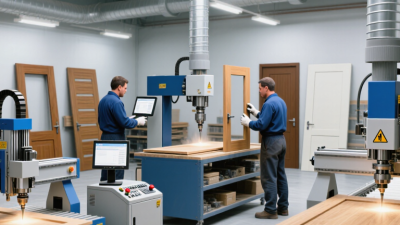
Global buyers often seek reliable production equipment without carrying the price of new machinery. Used Prehung Door Machinery can offer that balance. It may include prehung door assembly lines, hinge routing stations, lock boring units, and automated jamb systems. The real value depends on condition, configuration, and service history.

“Used equipment should be judged by performance records, not appearance,” says Daniel Mercer, a veteran prehung-door machinery consultant. His advice is practical. Inspect the frame, confirm the electrical specifications, and request a live production test. A clean cabinet means little if the spindle vibrates or the feeder misaligns doors.

Look closely.

Experienced buyers also compare tooling availability, replacement parts, installation support, and export packaging. A machine built for one market may need control-panel changes elsewhere. Those details affect the final landed cost. They also affect downtime after arrival.

I have seen sourcing decisions focus too heavily on the purchase price. That is a mistake worth reconsidering. A lower-cost machine can become expensive when manuals are missing, software is outdated, or technicians cannot access critical components. Conversely, an older system with documented maintenance may deliver dependable output for years.

Used Prehung Door Machinery is not automatically the safer choice. It is the measurable choice when suppliers provide evidence. Serial numbers, maintenance logs, test videos, and clear specifications create confidence. Careful comparison helps manufacturers expand capacity while controlling financial risk across international markets.
Why Choose Used Prehung Door Machinery for Global Sourcing?

Global Sourcing Drivers: Used Machinery Cuts Capital Costs by 30–60%

Used prehung door machinery offers a practical route into global production. The savings can be substantial. Independent 2024 used-equipment benchmarks report reductions of roughly 30–60% against comparable new machinery. EquipmentWatch’s market analysis supports this range across several industrial equipment categories, although door-line prices vary by age and condition.

A prehung door system may include hinge boring, lock drilling, routing, frame assembly, and pneumatic clamping stations. Buying these machines used can preserve cash for tooling, installation, and operator training.

The International Federation of Robotics reported 541,302 industrial robot installations worldwide in 2023. This shows continued automation demand, but not every factory needs the newest platform.

A well-maintained eight-year-old boring machine may still deliver accurate repeatability. Small omissions hurt.

The 30–60% figure is a planning guide, not a guarantee. I would question any quote that ignores spindle hours, controller support, voltage conversion, and missing fixtures. Buyers should request service records, test sample doors, and verify safety documentation before shipment.

UNCTAD’s Review of Maritime Transport 2024 highlights continued volatility in global shipping routes and costs. That makes local refurbishment and consolidated freight more valuable.

A realistic landed-cost model should include crating, customs clearance, replacement sensors, commissioning, and technician travel. The cheapest listing can become expensive quickly.

Technical Performance: CNC Door Lines Achieve Positioning Accuracy of ±0.1 mm

Used prehung door machinery can support global sourcing when accuracy, cost, and production flexibility matter. The key question is not simply whether a machine is used. Its previous maintenance, spindle condition, software compatibility, and calibration records require careful review. In practical workshops, these details often decide whether a machine saves money or creates repeated adjustments.

CNC door lines can achieve positioning accuracy of ±0.1 mm under suitable operating conditions. This precision helps align hinge recesses, lock holes, and panel edges with greater consistency. A difference of 0.1 mm may appear minor, but it affects assembly fit and reduces manual correction. Operators should verify accuracy with calibrated measuring tools, not rely only on a display reading. Small errors matter. Cutting speed, tool wear, material movement, and temperature can still influence results.

A well-inspected used line may deliver dependable performance for standard prehung door production. Buyers should request trial-cut records, maintenance history, and clear photos of control cabinets and guide systems. I have found that simple test pieces reveal more than attractive machine descriptions. However, older software may need updates, and replacement components can be difficult to source across borders. A realistic installation plan should include operator training, spare tooling, electrical checks, and local technical support. The ±0.1 mm figure is useful, but only when the complete production system can repeatedly maintain it.

Why Choose Used Prehung Door Machinery for Global Sourcing?

Technical Performance: CNC Door Lines Achieve Positioning Accuracy of ±0.1 mm

Evaluation Dimension Technical Data / Typical Range Relevance to Prehung Door Production Used-Machine Verification Point
CNC positioning accuracy Up to ±0.1 mm when correctly calibrated Supports consistent hinge recesses, strike-plate pockets, lock openings, and routing locations. Run a dimensional test on a representative door component and compare the result with the machine controller coordinates.
Repeatability Typically within approximately ±0.05–0.10 mm on well-maintained CNC equipment Reduces variation between repeated door leaves and frame components. Perform repeated cuts at the same coordinates and record the dimensional spread using calibrated measuring tools.
Workpiece compatibility Common door thickness range: approximately 30–60 mm; actual capacity depends on spindle, tooling, and clamping design Allows processing of common interior, residential, and light commercial door constructions. Confirm the permitted thickness, maximum panel dimensions, and clamping method from the machine documentation.
Typical processing functions Hinge routing, lock-body machining, strike-plate routing, drilling, edge profiling, and selected frame operations Combines several secondary operations in one production workflow and can reduce manual layout work. Inspect spindle condition, tool holders, aggregate heads, vacuum or mechanical clamps, and the availability of compatible tooling.
Production capacity Approximately 20–60 door sets per shift for multi-operation CNC workflows, depending on design, cycle time, loading, and labor Helps match the machine to small-batch, medium-volume, or repeat-order production requirements. Request a cycle-time demonstration using the buyer’s actual door dimensions and machining program.
Electrical compatibility Common industrial configurations include three-phase 380–415 V, 50 Hz; other voltage and frequency options are available Determines whether the machine can be installed without costly electrical conversion or control-system changes. Check the nameplate, motor ratings, control-cabinet specification, phase configuration, and local electrical requirements.
Compressed-air requirement Common operating pressure: approximately 0.6–0.8 MPa; flow demand varies by clamps, pneumatic valves, and tooling Stable air supply is important for workholding, tool changing, and pneumatic safety functions. Verify pressure, air consumption, filtration, moisture control, and the condition of pneumatic cylinders and hoses.
Spindle performance Common CNC door-routing spindle range: approximately 3–9 kW, with speed often controlled up to about 18,000–24,000 rpm Provides the cutting speed needed for solid wood, engineered wood, MDF, and other door components when matched with suitable tooling. Check spindle runout, bearing noise, cooling system, inverter condition, tool-holding system, and service history.
Control and file compatibility Typical systems use G-code or manufacturer-specific CNC formats; DXF and CAD/CAM workflows are commonly supported through post-processors Facilitates transfer of door and frame designs from CAD/CAM software to the machine controller. Test program transfer, file conversion, controller storage, software licensing, and availability of passwords or backup files.
Installation footprint Often approximately 5–12 m² for the machine itself; additional space is required for loading, unloading, dust extraction, and maintenance access Supports realistic factory-layout planning and reduces installation delays after international delivery. Measure the complete shipping and operating dimensions, including electrical cabinets, conveyors, guarding, and service clearance.
Dust extraction Required for wood and panel machining; system capacity depends on cutter count, ducting, and simultaneous extraction points Maintains cutting visibility, protects moving components, and supports a safer and cleaner working environment. Inspect extraction ports, flexible hoses, seals, dust hood condition, and the required airflow specification.
Economic value of used equipment Potentially lower acquisition cost than comparable new equipment, but savings depend on age, condition, tooling, software, and refurbishment needs Can provide access to CNC automation while reducing initial capital expenditure for global sourcing projects. Use a total-cost review covering inspection, refurbishment, spare parts, packing, freight, installation, training, and import charges.
Acceptance and quality control Recommended checks include geometric accuracy, spindle operation, axis movement, safety circuits, sample production, and documentation review Creates objective evidence that the used line can meet the buyer’s dimensional and production requirements. Use a pre-shipment inspection and a signed acceptance protocol based on agreed tolerances and sample-piece results.

Technical note: The stated accuracy and capacity figures are typical reference values for properly installed and maintained CNC door-machining equipment. Actual performance depends on machine model, age, calibration, tooling, material, workholding, software, operator skill, and maintenance history.

Production Scope: Compare Capacity, Automation Levels, and Door Sizes

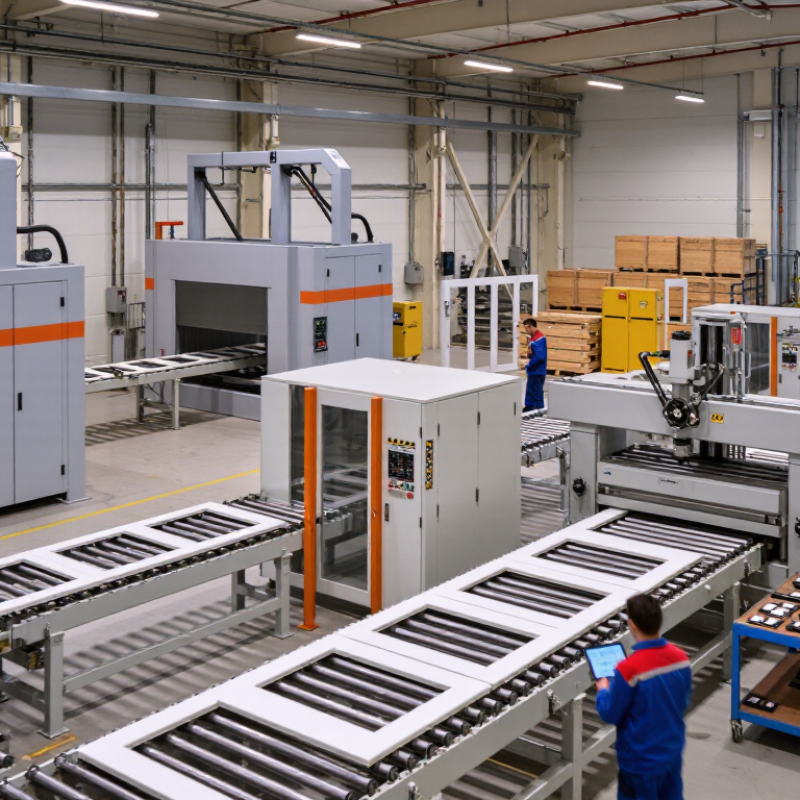
When sourcing used prehung door machinery, production scope matters more than a low purchase price. A machine rated for 500 doors per shift may deliver 320 in real conditions. Ask for records, not estimates. Check frame preparation, hinge routing, lock boring, assembly, and packaging stages. During an inspection, watch one complete cycle. Note changeover time, operator movements, and unfinished units. These details reveal practical capacity better than a catalog.

Automation levels shape labor needs and consistency. Semi-automatic lines can suit varied orders and smaller factories. They often require skilled operators during clamping and hardware placement. Fully automated systems may improve repeatability, but sensors, drives, and control panels need careful testing. Request error logs and maintenance history. Test emergency stops and guarding. Safety must be verified locally. A replacement component can interrupt production for weeks. That risk is easy to underestimate.

Door sizes deserve equal attention. Confirm supported leaf widths, heights, thicknesses, frame depths, and handing options. A line built for standard interior doors may struggle with oversized entry units. Measure actual tooling, not only software settings. Run narrow, wide, thick, and heavy samples. I have seen a line pass a standard sample yet fail during a 90-minute changeover. Used machinery can be valuable, but its limitations may appear only under mixed production. Build the buying decision around your product range, local labor, service access, and realistic daily targets.

Compliance Review: Align Output with ANSI/WDMA, CE, and Safety Standards

Used prehung door machinery can reduce sourcing costs, but compliance must guide every purchase decision. A lower price means little if the equipment produces inconsistent door assemblies.

A practical review starts with the machine’s records, labels, and physical condition. Check the serial plate, wiring diagrams, guard systems, and emergency stops. Inspect cutting heads, hinge mortising tools, clamps, and alignment tables for wear. Request maintenance logs and previous inspection reports. Missing documents are a warning sign. They should not be ignored.

The finished doors must match applicable ANSI/WDMA requirements for dimensions, operation, materials, and assembly quality. These standards may not regulate the machine directly, but they strongly influence its output. Run sample production before shipment. Measure hinge spacing, reveal gaps, latch alignment, and frame squareness. Record the results.

For equipment entering the European market, review CE-related machinery documentation carefully. Confirm the risk assessment, declaration of conformity, guarding, electrical protection, and operating instructions. CE marking alone is not proof of safe performance. Local safety rules may add requirements for installation, noise, training, or workplace control. An independent technician should verify these points before commissioning. Used machinery can perform reliably, but older controls may need upgrades. That cost should be calculated honestly.

Why Choose Used Prehung Door Machinery for Global Sourcing?

Compliance Review: Align Output with ANSI/WDMA, CE, and Safety Standards

This screening model prioritizes the evidence commonly required when evaluating used prehung door machinery: door-product compatibility, risk assessment, guarding, electrical safety, technical documentation, and conformity records. ANSI/WDMA primarily addresses door performance, while CE marking and machinery safety reviews focus on conformity and safe operation.

Due Diligence: Evaluate Total Cost, Spare Parts, and 10-Year Serviceability

Used prehung door machinery can support global sourcing when its real condition is measurable, not merely advertised. In factory audits, I inspect the frame, clamping stations, saws, drives, sensors, and control cabinets. A clean exterior proves little. I request production videos, maintenance logs, serial records, and recent dimensional checks. Then I compare those records with a live test using the buyer’s door sizes. Small alignment errors can become visible after hundreds of cycles.

Total cost must include dismantling, export packing, ocean freight, insurance, import charges, installation, electrical conversion, tooling, training, and commissioning. The purchase price is only the opening figure. I build a spreadsheet with optimistic, realistic, and failure scenarios. My early estimates were too optimistic when a missing fixture delayed commissioning for three weeks. That mistake changed how I review used equipment. Ask who pays for hidden corrosion, damaged cables, or software access. Get those answers in writing.

Total
Cost

Spare parts deserve a ten-year view. Request a component list, supplier references, substitute specifications, and current availability for motors, drives, sensors, seals, belts, and cutting tools. Generic parts may fit mechanically but behave differently in control systems. Confirm manuals, wiring diagrams, diagnostic procedures, and remote support terms. Also ask whether technicians can still service obsolete controllers. A machine can run today and still be a poor long-term asset. Leave room for uncertainty; no inspection predicts every failure.

Search this website